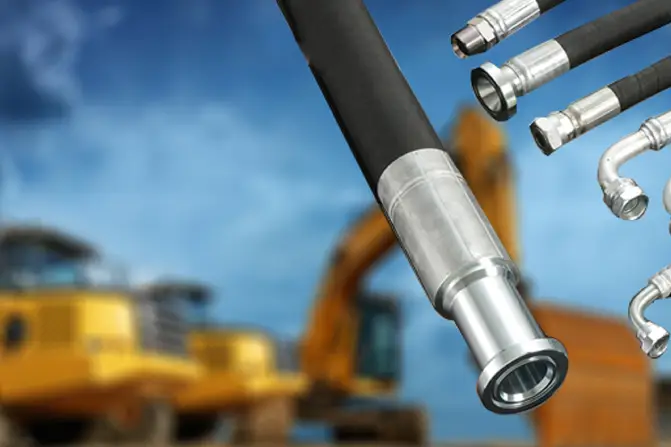
A reliable hydraulic hose manufacturer should provide certified materials, strict testing procedures, stable production capacity, and technical support. Buyers should check standards such as SAE J517, ISO 18752, pressure ratings, impulse test results, and customization ability. A qualified supplier can reduce hose replacement frequency, improve equipment uptime, and maintain safe hydraulic system performance in industries such as construction, mining, agriculture, and manufacturing.
Hydraulic hose selection affects the performance of many industrial machines, from excavators and loaders to agricultural equipment and factory automation systems. A hose failure can stop hydraulic functions immediately, so manufacturers must provide products that meet pressure, temperature, and durability requirements. According to industry reports, the global hydraulic hose market was valued at more than USD 12 billion in 2023, with demand supported by construction and industrial equipment growth.
A professional hydraulic hose manufacturer should begin with reliable raw materials and controlled production processes. Hydraulic hoses usually contain three layers: an inner tube, reinforcement layer, and outer cover. Each layer has a different purpose, including fluid resistance, pressure control, and protection against external damage.
The inner tube is normally made from synthetic rubber materials that must remain stable when exposed to hydraulic oil, temperature changes, and chemical contact. In many industrial systems, operating temperatures range from -40°C to 100°C, while special applications may require higher temperature resistance. Material selection directly affects service life and leakage performance.
The reinforcement structure determines how much pressure a hose can handle. Common designs include textile braided hoses, steel wire braided hoses, and spiral wire hoses. For example, SAE 100R2 two-wire braided hoses are often rated around 21 MPa working pressure, while spiral wire designs used in heavy equipment can exceed 40 MPa.
A hose used in mining or construction equipment may experience thousands of pressure changes every day, so manufacturers must verify long-term fatigue resistance before supplying products.
Manufacturing standards provide a basic method for comparing suppliers. Many international buyers evaluate manufacturers according to SAE, EN, and ISO requirements. SAE J517 defines hydraulic hose dimensions and performance requirements, while ISO 18752 covers constant pressure hydraulic hose specifications.
A supplier with certification should also maintain documented inspection procedures. ISO 9001 certification, used by manufacturers worldwide since its introduction in 1987, requires controlled processes for quality management, production records, and continuous improvement.
However, certificates alone do not show the complete production ability. Buyers should review actual testing methods, production equipment, and quality inspection records before making long-term purchasing decisions.
Hydraulic hose production requires several technical stages, including rubber extrusion, reinforcement braiding, cover extrusion, curing, cutting, and assembly. Modern factories often use automated equipment to improve dimensional accuracy and reduce variation between batches.
During production, manufacturers should check:
| Inspection Item | Purpose |
|---|---|
| Pressure testing | Confirms hose strength under operating conditions |
| Burst testing | Measures maximum pressure before failure |
| Impulse testing | Evaluates fatigue resistance during repeated pressure cycles |
| Adhesion testing | Checks bonding strength between hose layers |
| Dimensional inspection | Ensures correct fitting and installation |
Testing frequency also matters. Some manufacturers test every production batch, while others perform only random inspections. A supplier that maintains detailed inspection records can provide better product consistency for customers requiring large quantities.
Material technology is another factor when comparing hydraulic hose suppliers. Different applications require different cover materials and reinforcement structures. Construction machines often require abrasion-resistant covers because hoses may contact metal surfaces, dust, and rough environments.
Agricultural equipment usually requires hoses that can handle outdoor exposure, temperature changes, and frequent movement. Industrial automation systems may require smaller bending radius designs because hoses are installed in compact spaces.
The following factors are commonly evaluated when selecting a supplier:
| Factor | Recommended Requirement |
|---|---|
| Pressure rating | Match or exceed system requirements |
| Temperature range | Suitable for working environment |
| Hose flexibility | Supports installation conditions |
| Chemical resistance | Compatible with hydraulic fluids |
| Production capacity | Able to support long-term supply |
A manufacturer’s engineering support is also important when selecting the correct hose type. Hydraulic systems often have different pressure levels, routing conditions, and fitting requirements. A supplier with technical experience can recommend suitable hose structures instead of providing only standard products.
Customization ability has become more common in global hydraulic markets. Many equipment manufacturers require specific hose lengths, fitting combinations, cover materials, or labeling methods. Suppliers with flexible production lines can support small batches as well as large industrial orders.
Delivery performance should also be considered because hydraulic components are often needed for equipment maintenance and production schedules. A manufacturer with organized inventory management can reduce waiting time for commonly used hose models.
International customers usually review several supply factors:
-
Production capacity and factory equipment
-
Export experience and documentation
-
Packaging quality
-
Technical communication speed
-
After-sales service availability
These factors become more important as hydraulic systems become more advanced. Modern machines often operate at higher pressures while requiring smaller and lighter components. Between 2015 and 2025, many equipment manufacturers increased hydraulic system efficiency requirements, creating greater demand for durable hose solutions.
Cost comparison should include the entire service period rather than only the purchase price. A low-cost hose may require more frequent replacement if materials or manufacturing quality are inconsistent. A higher-quality product with longer service intervals can reduce maintenance frequency.
For example, if a machine operates 2,000 hours per year and a hose replacement requires several hours of downtime, improving hose durability can create measurable savings. In industries such as mining and construction, equipment downtime costs can reach thousands of dollars per hour depending on machine type.
The most suitable supplier combines reasonable pricing with stable quality, accurate specifications, and dependable delivery performance.
Before purchasing large quantities, buyers can evaluate manufacturers through sample orders, factory visits, technical discussions, and performance testing. A supplier should be able to provide product specifications, pressure data, material information, and quality reports.
A reliable hydraulic hose supplier should also understand different market requirements. Equipment used in Europe, North America, and other regions may follow different technical standards and customer expectations. Manufacturers with international experience usually have stronger knowledge of these requirements.
Long-term cooperation depends on consistent production quality and communication. Regular feedback between equipment manufacturers and hose suppliers helps improve product design, installation methods, and maintenance planning.
Selecting a hydraulic hose manufacturer requires evaluation of engineering capability, material quality, testing procedures, customization services, and supply reliability. Companies that combine modern production methods with strict inspection systems are more likely to provide hoses that perform safely in demanding hydraulic applications.